
Azure, three pair of backgammon table open of the first, pointed argent, edged or--John PEGREZ.Badelaire, (fr.): a broad-bladed sword, or scimetar, slightly curved. The sabre comes nearest to it.
  STEPHEN. A Sagittary?                   HEN. VI. Antelope collared and
    Ostrich feathers(Guillim).                chained.
  HEN. II. Escarbuncle(Mackenzie).          Two feathers in saltire(MS. Bib.
    Sword and olive-branch(Cotton).           Reg.)
  RIC. I. Star within crescent(Great        Spotted panther passant guard.
      Seal).                                  (MS. Harl.)
    Star and crescent separate(Great                  YORK.
      Seal).                                A white rose.
    Armed arm holding lance(Cotton).        White rose en soleil(MS. Bib. Reg.).
    Sun on two anchors(Guillim).          ED. IV. Falcon within fetterlock
  JOHN. Star within crescent(Silver           (ironwork)
      penny).                               Bull sable[for Clare].
  HEN. III. Star within crescent            Dragon sable[for Ulster].
      (Great Seal).                         Sun in splendour(Baker).
  ED. I. Rose, stalked(MS. Harl).           White hart.
  ED. II. Hexagonal castle(Great            White wolf(MS. Lansd.)
      Seal).                              ED. V. Falcon within fetterlock
  ED. III. Rays from clouds(Cam-              (painting).
      den).                               RIC. III. Rose and sun separate
    Stump of tree(MS. Harl.)                  (Great Seal).
    Ostrich feathers(MS. Harl.)             Falcon with maiden's head(Sculp-
    Falcon.                                    ture).
    Griffin(Private Seal).                            TUDOR.
    Sword and three crowns(MS.              Red and white roses united.
      Harl.)                                Roses separate and crowned.
  RIC. II. Sun in splendour(MS.             Portcullis.
      Harl.)                                Fleur de lis.
    Sun behind cloud(effigy).             HEN. VII. A red dragon (Baker).
    A branch of broom(?) (effigy).          Hawthorn bush crowned(glass).
    White hart couchant.                    Dun cow(Baker).
    Stump of tree.                          Greyhound courant(for Beaufort).
    White falcon(Hollingshed).            HEN. VIII. Greyhound courant.
            LANCASTER.                    ED. VI. Sun in splendour(Cotton).
    Red rose.                             MARY. Double rose impaled with a
    Red rose en soleil.                        sheaf of arrows within a semi-
    Collar of SS.                             circle(MS. in Coll. of Arms).
  HEN. IV. A genet(on his tomb).            Rose and pomegranate,
    Eagle displayed(ibid.)                ELIZABETH. Harp crowned[for
    Tail of a fox pendent(Camden).             Ireland].
    Crescents(Hollingshed).                 A rose.
    Panthers and eagles crowned(MS.                  STUART.
      Harl.)                                Roses united[for England].
  HEN. V. A beacon inflamed.                Fleur de lis[for France].
    Antelope gorged with a crown.           Thistle, leaved[for Scotland].
    Swan gorged with a crown.               Harp[for Ireland].
A white rose within a red one, barbed seeded, slipped and leaved proper, and ensigned with the imperial crown, for ENGLAND.
A thistle, slipped and leaved proper, and ensigned with the imperial crown, for Scotland.
A harp or, stringed argent, and a trefoil vert[i.e. shamrock] both ensigned as before, for Ireland.
Upon a mount vert, a dragon passant, wings expanded and endorsed, gules, for Wales.
|
| Crown Keeper's Badge. |
    Old Clifford.--Might I but know thee by the household badge.
         Warwick.--Now by my father's badge, old Nevil's crest,
                   The rampant bear chained to the ragged staff, etc.
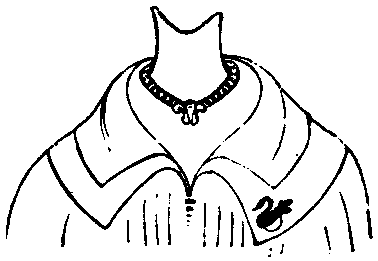 |
| Brass of LADY PERYENT. |
Or, a badger passant sable--BADGER.
Or, on a fesse sable between three brocks passant proper two cinquefoils pierced argent, on each foil an ermine spot--James BROKS, Bp. of Gloucester, 1554-8.
Argent, three brocks proper--BROCK.
Argent, a chevron between three badger's legs erased sable--YARMOUTH.
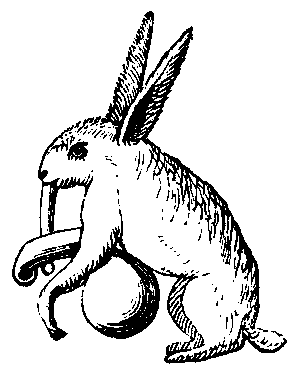 |
| Hare playing on bagpipes. |
Argent, three hares sejant playing upon bagpipes gules--HOPWELL, Devon.
Argent, three hares sejant gules, playing upon bagpipes or--FITZ-ERCALD, Derby.
[The illustration of a hare playing upon the bagpipes is from MS. Harl. 6563, written in the fourteenth century.]Bague, (fr.): a gem, or finger-ring.
Azure, a pair of balances within an orle of eight estoiles or--STARR.Balcanifer, or Baldakinifer: the standard-bearer of the knights Templars.
Azure, a pair of balances supported by a sword in pale argent, hilt of pomel or, within a balance of the last--JUSTICE, Scotland.
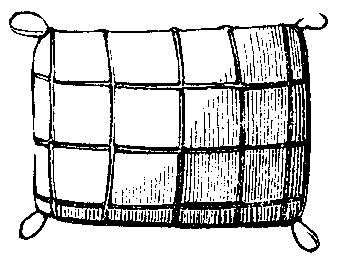 |
| Bale corded. |
 |
| Bag of madder. |
Argent, a ship of three masts in full sail on the sea in base, all proper; on a chief or, a bale of silk corded proper, between two bundles of silk pendant of the last--Company of SILKMEN, London[Inc. and arms granted, 1631].Balista, See Sling.
Sable, a chevron engrailed argent, between three bags of madder of the last, corded or--Company of DYERS[Inc. 1471].
Argent, three sprigs of balm flowered proper--BALM.Bandé, (fr.): for bendy.
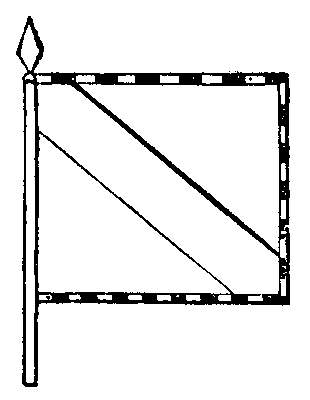 |
| Banner. |
Le baucent del HOSPITALE, de goules a un croyz d'argent fourme.--Le baucent[another MS. Le Auncient] del TEMPLE, dargent, al chef de sable a un croyz de goules passant--Roll, temp. HEN. III.The Military Banners most frequently borne in the English army during the middle ages(besides those of Knights bannerets and other noblemen) were those embroidered with the arms of the sovereign, or with the legendary arms of SS.George, Edmund, and Edward the Confessor, patrons of England. The military banner might contain quarterings, but not impaled arms.
A red banner, charged with the symbol of the Holy Trinity, was borne at the battle of Agincourt, A.D. 1415.The Oriflamme was the military banner of the French army, being derived from a banner anciently belonging to the Abbey of S.Denis, near Paris. It was charged with a saltire wavy, with rays issuing from the centre crossways, and from these rays the name auriflamme was no doubt derived.
The banner of S.John of Beverley was borne in the English army 24 Edw. I. (1295) by one of the vicars of Beverley college.
S.Cuthbert's banner was carried in the English army by a monk of Durham in the wars with Scotland, about 1300; and again in 1513.
The oriflamme borne at Agincourt was(according to Sir N. H. Nicolas) an oblong red flag, split into five points.The banner was used also as a charge, occurring generally hung from the walls of a castle, and the Paschal Lamb is usually represented carrying a banner.
Gules, on a banner or, an imperial eagle charged with an escutcheon argent, the staff held by a griffin segreant of the last--GARBETT.Banneroll(?). See Banner.
Quarterly, first and fourth gules, a banner displayed argent; thereon a canton azure charged with a S.Andrew's cross of the second; second and third or, a cross moline azure within a bordure engrailed argent--BANNERMANN, Elsick.
Azure, three banners bendwise in pale flowing to the sinister or--KINGDOM.
Argent, on a cross gules a Paschal Lamb or, carrying a banner argent charged with a cross of the second--Hon. Society of the MIDDLE TEMPLE.
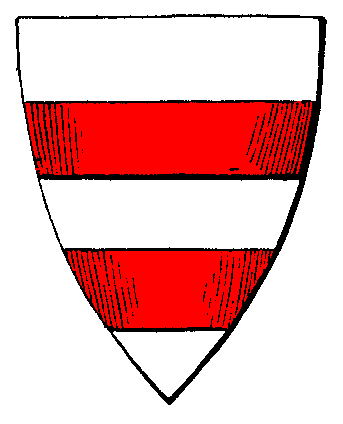 |
| MAUDUIT. |
William MAUDYT,--d'argent a deus barres de goulz--Roll, temp. HENRY. III.In bar, or barwise, signifies the horizontal arrangement of charges in two or more rows; the term in fesse being proper only when there is but one row, i.e. placed across the fess-point.
Richard de HARECOURT,--d'or a deux barres de goules--Ibid.
Sire Andreu le GRIMSTEDE, de goules a iij barres de veer--Roll, temp. ED. II.
Sire Wary MARTIN, de argent a ij barres de goules besantes de or--Ibid.
Monsire Hugh SEINTTLE, port d'asur a deux barres d'argent; au cheif de gules--Roll, temp. ED. II.
Tremon de MENYLL,--d'azur a trois gemelles, et ung cheif d'or--Roll, temp. HEN. III.And sometimes it appears that each bar of a bar-gemel was counted as a gemelle.
Roand le Connestable de RICHEMUND, de goules a ung cheif d'or, a deus gemeus de l'un en l'autre d'or--Ibid.
Sire Wauter de HONTERCOMBE, de ermyne, a ij barres gymeles de goules--Roll, temp. EDW. II.
Azure, a bar and a-half argent, in the sinister quarter a garb or--SCHEFFELD(Glovers ordinary).
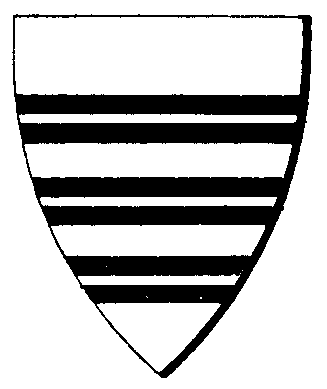 |
| ERCALL. |
Argent, three bars-gemels sable--ERCALL.Bars like the fesse may be embattled, dancetty, nebuly, wavy, &c., and a shield may be divided per bar and per base bar, q.v.
Sr Thom's de RICHMOND port de gules le chef d'or ov quatre gemeus d'or--Harl. MS. 6589.
Argent, three bars-gemels gules--BARRY, Earl of Barrymore, Ireland.
Gules, three bars-gemels and a canton ermine--BARDWELL.
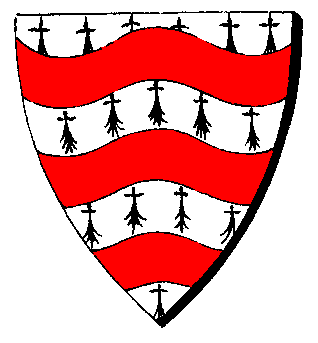 |
| LACY. |
Ermine, three bars wavy gules--LACY.N.B. In French heraldic works the word barre is used as equivalent to a bend sinister, and this is supposed in many cases to be a mark of bastardy, Hence the expression is often found of a bar sinister, meaning a bend sinister. The modern French equivalent for the bar, fasce en divise, means that it is a fesse of half its ordinary width. See also under Barbel.
[In Roll, temp. Edw. II. Sir Johan de LACY, oundee de gules et de ermine].
Argent, two bars embattled ermine--BURNBY, co. Devon.
Argent, two bars counter embattled gules--JAMES, co. Essex.
Gules, two bars dancetty or--SAMLER.
Argent, two bars nebuly sable, a bend or--POWER, co. Surrey, 1601.
Azure, two bars wavy or--Sir Walter de la POOLE.
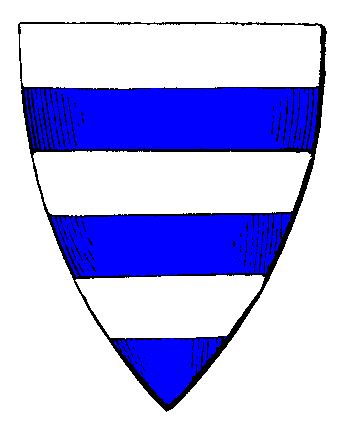 |
| DE GREY. |
Richard de GREY, barry d'argent et d'azure--Roll, temp. HEN. III.The division of the shield into party-coloured pieces by means of lines is not unfrequent, and the barry is combined for the sake of variety with other line-divisions. The following will give some idea of the varieties.
Alayn de Fitz Brian, barree d'or et de gules--Ibid.
Patrick de CHAURCY, burele d'argent et de goules--Roll, temp. HEN. III.
Barry of six, ermine and gules--HUSSEY, Wilts.
Barry of ten, argent and gules--BARRY, Lord Barry.
Barry of ten, argent and sable--BARRALL.
Barry of twelve, or and sable--BOTFIELD, Salop.
Barry of twenty, argent and azure--BRUN.
Per pale or and argent barruly wavy gules--Sire Richard de AUNTESHEYE.
Barry dancetty azure and argent--TURBERVILLE.
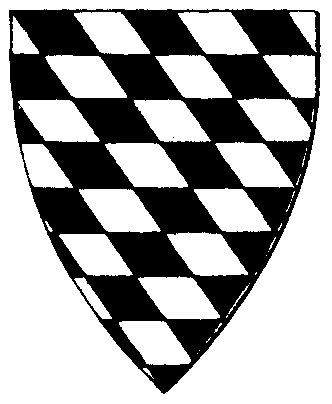 |
| Barry-bendy. |
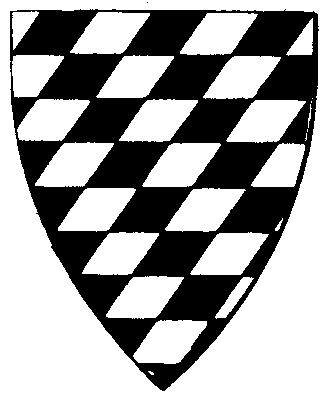 |
| Barry-bendy sinister. |
Barry bendy of six argent and gules--AMERY.Barry indented and Barry dancetty have the lines drawn so that apex falls beneath apex.
Barry bendy lozengy argent and gules--QUARM, Devon.
Bendy sinister and barry, gules and argent--WYER.
Barry of four indented or sable or azure--Richard MITFORD, Bp. of Chichester, 1389, of Salisbury, 1396-1347.
Barry indented, argent and gules--John BALUN.
Barry dancetty of six azure and argent--TODENHAM.
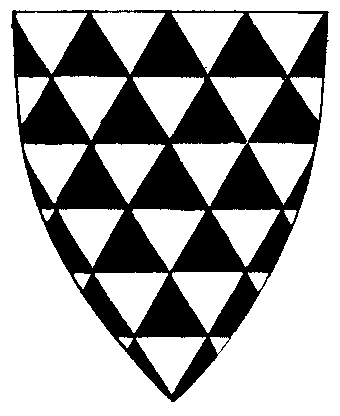 |
| Barry indented. |
Barry of six argent and sable, indented, the one in the other--GUISE, or GYSE, Glouc.
Barry indented, the one in the other, or and azure, on a chief gules, three cross crosslets of the first--MOUNTAINE, Westminster, 1613.
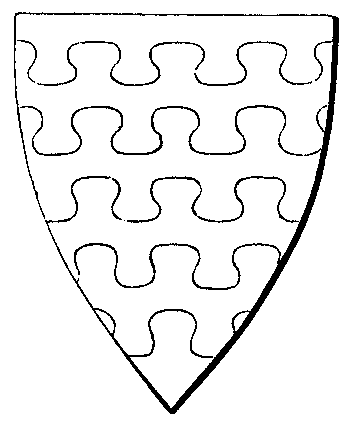 |
| Barry nebuly. |
Barry nebuly of six argent and azure, on a bend gules a lion passant gardant or--HABERDASHERS' Company. Arms granted in 1571.
Barry nebuly of six, or and gules--DOLSEBY, London.
Barry nebuly of six, or and sable--BLOUNT, Bart. 1642.
Barry wavy of six, ermines and argent--MORRIS.
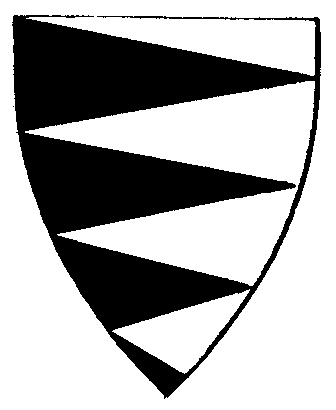 |
| Barry pily. |
Barry pily of eight, or and gules--HOYLAND, Linc.Barry per pale counterchanged is when the field is divided into several pieces barwise, and by a party-line palewise the tinctures on each side of that line are counterchanged. For barry paly see billetty.
Barry pily of eight, gules and or--VANCE, Ireland.
Barry of six, sable and or, per pale counterchanged--SCURFIELD.N.B. In modern French heraldic works barré seems to be used generally as the equivalent of bendy sinister, just as the bar is used for the bend sinister, as has already been noted.
Barry of twelve, per pale azure and argent counterchanged--MOORE, Salop.
Argent, a barberry branch fructed proper--BERRY.Barbed, (fr. barbé); bearded: an expression chiefly applied to the metal point of an arrow, sometimes also to the green leaves of a rose, when any of these are of a different tincture. By the French also to the gills of cocks, &c. A cross when 'barbed' is called a Cross barby.
Gules, three arrows argent, barbed or--Nicholas HALES.Barbel, (fr. barbeau, lat. cyprinus); the fresh-water fish, so named from the barbs attached to the mouth; and with this may be classed the Tench(tinca vulgaris) as similar in character.
Argent, on two bars gules, three roses of the field, barbed vert, seeded or, two and one--ORLEBAR, Bedford.
De gueules, a trois coqs d'argent, becqués, crêtes, barbés, et membrés d'or--SANDELIN, Artois.
Sr John de BARE porte d'azure ov ij barbes d'or croisele d'or ov la bordure endente de gules--Falkirk, roll, Harl. MSS.The bar in French heraldry sometimes means the barbel, but generally the sea-fish so named(lat. sciœna).
Azure, semé of cross crosslets fitchy at foot or, and two barbels embowed and endorsed of the same, eyes argent--Arms of the duchy of BARRE, which are quartered by QUEENS' COLLEGE, Cambridge.
Argent, two barbels haurient, respecting each other sable--COLSTON.
Borne also by families of BARWAIS, BARDIN, BARE, BERNARD, BURES, &c.
Azure, a fesse, or, between three tenches argent--WAYTE, Norfolk.
Borne by families of VON TANQUES and of Marshall TENCHE, Flanders.
Le Counte de Bar, d'azur, pudre a croisile dor a deux bars de mer--Roll, temp. HEN. III.Barnacle, or Barnacle goose, (old name Bernak); it is known now as the Cleg or Clark goose, perhaps the same as the Solan or Orkney goose; Anser bernicla is recognized by all naturalists.
Gueules, a un bar contourné d'argent, la tête surmountée d'une fleur-de-lis d'or--Ville dê BARFLEUR, Normandy.
Sire William BERNAK de argent a une fesse e iij bernaks de sable--Roll, temp. EDW. II.Barnacle or Horse-barnacle: generally spoken of as a Pair of barnacles, and in a roll of Henry III. called Breys, is supposed to represent at instrument used by farriers(fr. morailles) to curb unruly horses. It is occasionally borne extended, that is, horizontally.
Sable, a barnacle goose argent; Azure, three barnacles argent--BARNACLE.
Gules, a barnacle goose argent--BARNER.
Argent(?), a chevron ermines between three barnacle birds close proper--WYKE.
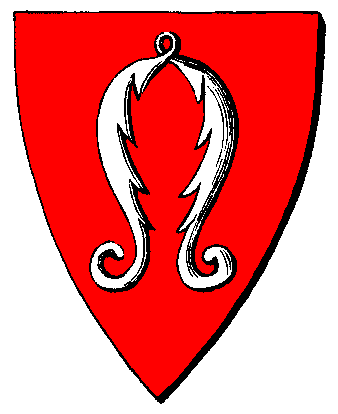 |
| WYATT. |
Gules, a barnacle argent--WYATT, Kent.The most celebrated instance of the barnacle expanded is the coat of the illustrious French family of Joinville, or as the English called it, Geneville.
Argent, three pair of barnacles, expanded in pale sable--BRAY, Cornwall.
Argent, four bars wavy azure on a chief gules, three pair of barnacles or--SMITH, Suffolk.
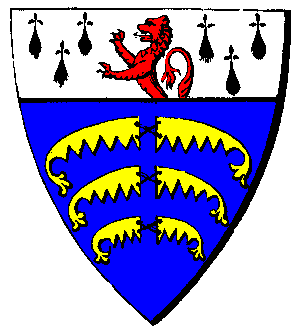 |
| JOINVILLE. |
Geoffrey de GENEVILE d'azure, a trois breys d'or au cheif d'ermyne ung demy lion de goules--Roll temp. HEN. III.Baron: the fifth and lowest rank of the British peerage. The title, introduced into England immediately after the Norman conquest, was originally applied to all the Thanes(or feudal lords under the rank of earl) who held great fiefs of several Knights' fees, but was subsequently restricted to those summoned by writ to parliament, a practice which dates from the reign of John. The first baron by patent was John Beauchamp of Holt, who was raised to the peerage by K. Richard II. in the eleventh year of his reign(Oct. 10, 1387) by the title of baron of Kidderminster. No other instance occurs until 10 Hen. VI.
Simon de GENEVILL a trois breys d'or, au chief d'argent ung demi-lion de goules--Ibid.
"Provided always that you proceed with none, except it shall appear unto you upon good proof that they are men for quality, state of living, and good reputation, worthy of the same: and that they are at least descended of a grandfather by the father's side that bore arms: and have also a certain yearly revenue in lands of inheritance of possession, one thousand pounds per annum de claro, or lands of the old rent, as good(in account) as one thousand pounds per annum of improved rents, or at the least two parts in three to be divided of lands to the said values in possession, and the other third part in reversion, expectant upon one only life, holding by dower or in joynture."The first baronet created was Sir Nicholas Bacon.
Sable, a hand-barrow between nine roses or--BEARWELL.Barrulet, Barrelet, or Bracelet, and Barruly. The Barrulet is a diminutive of the Bar, of which it is one-fourth, that is to say, a twentieth part of the field; the closet being one half of the bar. It is never borne singly.
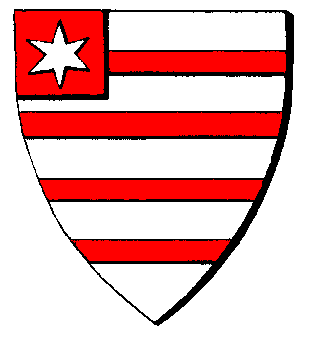 |
| WACE. |
Argent, four barrulets gules; on a canton of the second a mullet of six points of the first--WACE.Beyond this the term barruly[or barruletty, fr. burellé, old fr. burlé] is used by some writers is describing a field horizontally divided into ten or any higher even number of equal parts; practically, however, the term barry might be used in most cases.
Azure, six barrulets gemel[=12 barrulets] and a chief or--MENELL, York.
Argent, seven barrulets gemel azure[=14 barrulets]--INGERSALEM.
Sable, eight barrulets gemel[=16 barrulets] and a canton or on two bars azure, as many barrulets dancetty argent. A chief indented of the second--SAWBRID, [Indented argent--BUCKTIN, York.]
Patrik de CHAURCY, burele d'argent et de goules--Roll, temp. HEN. III.Barry. See under Bar.
Le Counte DE LA MARCHE, burule de une menue burlure dargent et de azur--Another Roll, temp. HEN. III.
Sire Robert de ESTOTEVILE, burlee de argent e de goules a un lion rampand de sable--Roll, temp. ED. II.
Argent, a lion rampant and a base indented purpure--John de SKIPTON, Harl. MSS. 1386.Basilisk. See Cockatrice.
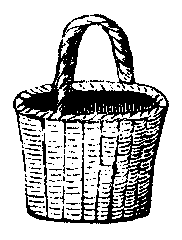 |
| 1.Basket. |
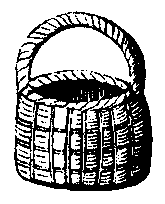 |
| 2.Wicker Basket. |
Azure, three baskets or--GARDEN.
Sable, three baskets[like fig. 1] argent--LITTLEBURY.
Sable, three wicker baskets[otherwise dossers] with handles argent--Sir John LITTLEBORNE.
Sable, a bend or, between three hand baskets argent--WOOLSTON, co. Devon. 1716.
Gules, three covered baskets or--PENTNEY Priory, Norfolk.
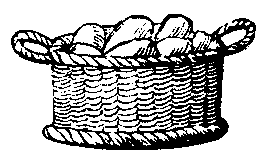 |
| Bread-basket. |
Sable, three baskets full of bread argent--MIDDLETON Abbey, Dorset.
Azure, three baskets or--GARDEN.
Argent, two bars sable ..... a basket of bread(i.e. wastel-cakes) or on the sinister side--London, BETHLEHEM Hospital.
Azure, a basket of fruit proper between three mitres or--JANE, Bp. of Norwich, 1499-1501.
 |
| Winnowing-basket. |
Sire Robert de SEVENS de azure, a iij vans de or--Roll, temp. ED. II.The four implements, viz. prime, iron, cutting-knife, and outsticker, used in basket-making are represented on the insignia of the Basket-makers' Company:--
[N.B. The brass of Sir H. de Septvans in Chartham Church, Kent(ob. A.D. 1306), has the three vanes only, and not seven, as might have been expected from the name.]
Azure, three cross-baskets in pale argent between a prime and an iron on the dexter, and a cutting knife and an outsticker on the sinister of the second--BASKET-MAKERS' Company.4. Fish-baskets. See Weel.
"Some war with rere-mice for their leathern wings"--SHAKESPERE, Mids. Night's Dream.
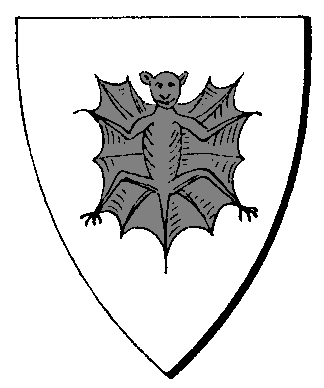 |
| STAININGS. |
Argent, a bat displayed proper--STAININGS.Bataillé, (fr.): of a bell when the clapper(batail, old fr. for battant) is of a different tincture.
Or, a bat volant gules; a rere-mouse vert--ATTON.
Or, a bat's wing gules, surmounted of another azure--ALDEN.
 |
| Baton. |
 |
| REGINALD, Earl of Cornwall. |
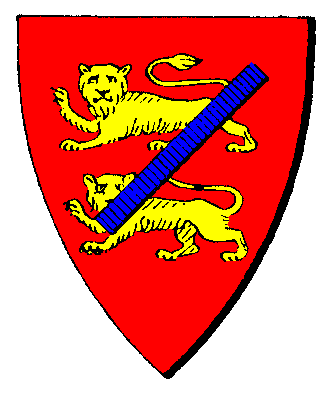
Gules, two lions passant guardant[HENRY I.] with a batoon sinister azure--REGINALD, base son of Henry I., created Earl of Cornwall,It was said that the baton should not be laid aside until three generations had borne it, and not then, unless succeeded by some other mark assigned by the king of arms, or unless the coat was changed. Dexter batons are but rarely met with. Sometimes a small baton appears in the mouths(fr. baillonné) or between the paws of animals, such as lions, dogs, bears, &c., but this almost entirely in crests.
Quarterly vert and or a couped baston of the second--DE HISPANIA.In the sense of an ordinary bendlet, (q.v.)
Gules, on a bend engrailed or, a baston azure--ELLIOT(1666).
Gules, a chevron raguly of two bastons couped at the top argent--Christopher DRAIESFIELD, Harl. MS. 1386.
Argent, a lion rampant azure, a dexter baton compony or and gules--Sir Richard de DOCKESSEYE.
Argent, a lion rampant gules, over all a dexter baston compony or and azure--Piers LUCIEN.
Argent, a lion rampant sable holding a baton in pale azure--WILLISBY.
Monsire JEFFREY DE CORNEWALE, d'argent une lyon de gules couronne d'or: une baston de sable charge de trois mullets d'or--Roll, temp. ED. III.Baton-cross. See Cross, §8, 31.
 |
| Battering-ram. |
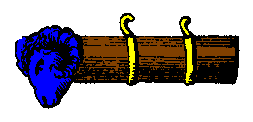
Argent, three battering-rams barwise proper, headed azure, armed and garnished or--BERTIE.Battle-axe. See Axe.
 |
| Beacon. |
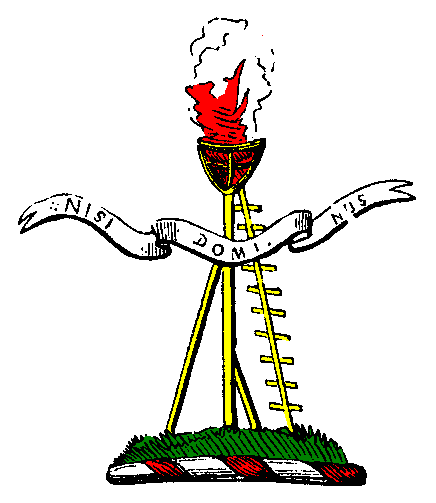
A beacon or, inflamed proper--Badge of Henry V.Beads. See Rosary.
Sable, three beacons with ladders or, fired proper--DAUNT.
Azure, three beacons with ladders or, fired proper--GERVAYS.
Azure, three beans or--MERTON.Bear, (fr. ours): frequent in German arms, and in some instances in Scottish arms, but comparatively rare in English arms, though not unfrequent as a crest, and sometimes the head or jambs are chosen for the latter apart from the body. In one coat of arms Sea-bears are named: it is not clear what is meant, possibly Seals, but more probably Polar-bears. The Canton of Berne in Switzerland, as well as the Abbey of S.Gall, exhibit the bear in their insignia. Bears appear also as supporters.
Argent, three bean-cods transverse the escutcheon proper--HARDBEANE.
Gules, three bean-cods pendent or--BEANE.
Argent, a chevron gules, between three bean-pods vert--RISE, Cornwall.
Argent, a chevron between thee sheaves of beans sable--BLAKE, Northumberland.
 |
| BERNARD. |
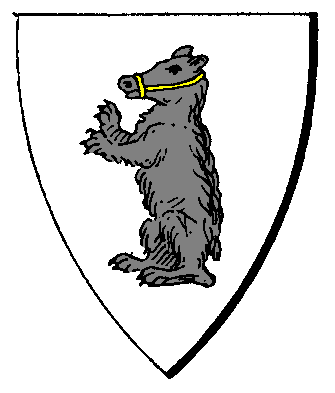
Argent, a bear rampant sable, muzzled or--BERNARD.Bearded, or aulned. See Wheat.
Sire Richard de BARLINGHAM de goules a iij ours de argent--Roll, temp. ED. II.
Gules, on a bend or a bear passant sable--Canton of BERNE.
Argent, a bear erect sable--Abbey of ST.GALL.
Azure, a fesse or; in chief a bear's head proper muzzled and ringed of the second--BARING[Bp. of Gloucester and B., 1856; of Durham, 1861-79].
Per chevron sable and argent three sea-bears counterchanged--FLOWERDEW, Norfolk.
Vert, on a base barry of five argent and azure two beavers, rampant combatant or--Thomas BEVERIDG, co. Chester, 1595.Beaver, or Beauvoir: the part of the Helmet which opens to shew the face.
Or, a fesse azure between lions rampant in chief gules, and a beaver passant in base proper--BEAVER.
Argent, three beaver's tails[erect] gules--BEAVER.
Argent, a cross gules between four beavers passant proper--HUDSON BAY Company[Inc. 1670].
 |
| BYE. |
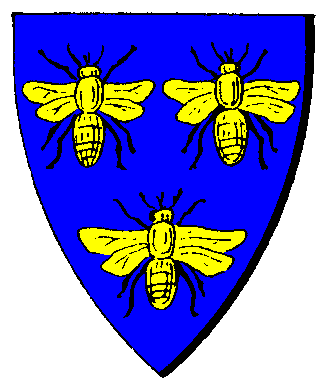
Azure, three bees volant erect or--BYE.
Azure, three bees volant en arriere argent--BYE.
Sable, a chevron between three bees volant erect argent--SEWELL.
Azure, on a fesse argent a bee volant arriere sable--DE VERTHON.
Or, on a bend azure, three bees volant argent--BUTTERFIELD.
Gironny of eight ermine and gules, on each of the last a bee volant argent--CAMPBELL, Gargamock.
Sable, a hornet argent--BOLLARD.
 |
| ROWE. |
Argent, a bee-hive, beset with bees diversely volant sable--ROWE.Beech. Only one reference to this tree has been noticed.
Argent, a bee-hive, beset with bees volant proper--TREWEEK, Cornwall.
Ermine, a fesse sable between three bee-hives or--FRAYE.
Argent, on a bee-hive sable a hart lodged argent, attired or--SANDELLAYER, Stafford.
Azure, an eagle displayed argent, in his beak a branch of beech or; on a chief of the last a rose between two crosses bottonny gules--BULLINGHAM, Bp. of Gloucester, 1581-89.Beetle: possibly this is but an error of some writer, who has mistaken the flies for beetles(as the name of the bearer suggests); however, the stag beetles(lucanidœ of naturalists) occur.
Argent, a chevron vert between three beetles proper--MUSCHAMP.Beffroy, or Beffroy de vair: an old French term for vair.
Per pale gules and azure, three stag beetle's wings extended or--DOORE, Cornwall.
 |
| Church Bell. |
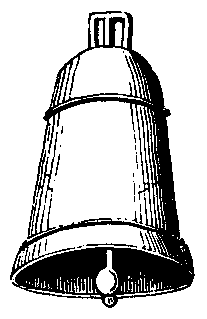
Sable, three church bells argent--PORTER,A belfry occurs as a crest to the family of PORTER, and in this a bell argent is represented as supported between two pillars roofed and spired or, and on the spire a vane of the last.
Sable, a fesse ermine between three bells argent--BELL.
Argent, three war bells gules--KEDMARSTON, co. Suffolk.
Azure, a lion rampant guardant within an orle of bells argent, cannoned or--OSNEY, co. Lincoln.
Sable, a doe passant between three bells argent--DOOBEL, Sussex, 1695.
Argent, on a cross gules five bells of the first--SEDGEWICKE, Cambridge.
Or, four bars sable; on three escutcheons argent as many church bells of the second, clappers of the first--HALL, Essex.
Argent, three pair of bellows sable--SCIPTON.Beloochee soldier. See Man.
 |
| Belt. |
Argent, a demy-belt fixed in fesse azure buckled edged and garnished or--BELTMAINE.
Argent, three belts, the under parts couped in fesse azure, buckled and garnished or--NARBON.
Gules, two pieces of belts[otherwise half-belts] palewise, in fesse, argent, the buckles erect in chief or--PELHAM.
 |
| FOLIOT. |
 |
| COUGHTE? |
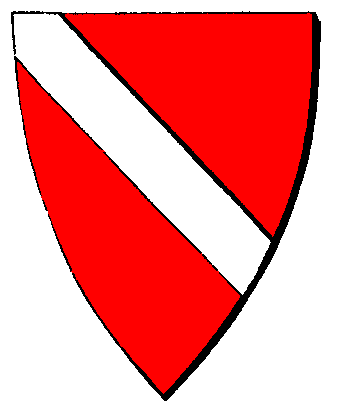
Gules, a bend argent--FOLIOT[or as it is written in a Roll of arms, temp. Henry III. 'Richard FOLIOTT, de goulz ung bend d'argent'].A bend is very frequently subjected to a modification of its margin, and is engrailed, invected, indented, embattled, counter-embattled, bretessed, raguly, champaine(or warriated), nebuly, wavy; also bevilled, cotticed and fimbriated, all of which terms will be found explained.
William de GAUNT, barreé d'argent et d'azure, ung bend de goules--Roll, temp. HEN. III.
John de VAUX, ung bend escheque d'argent et de goules--Ibid.
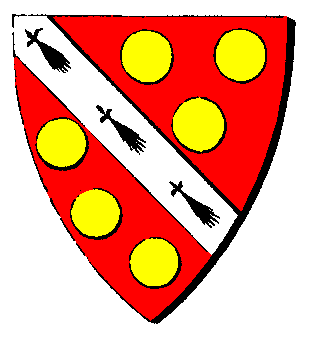
Gules, a bend ermine between six bezants--[? Sir Armoyne COUGHTE, from arms in Dorchester Church, Oxon.]
Robert WALROND, d'argent ung bend engrele de goules--Roll, temp. HEN. III.A bend is also frequently charged with various devices, and when charged upon the upper part this should be noticed, because when a bend is simply described as charged, it signifies it is so on the centre or fesse-point. All charges placed upon a bend, in bend, or between cottices, must stand bendwise, not perpendicularly. Even the furs follow this rule, although generally upright on all other ordinaries. Illustrations of bends besides those given in the present article will be found under compony, cottised, embowed, engrailed, fleury, pierced, raguly, wavy, and also bearing such charges as magnet, mullet, spear, wyvern, &c.
Sire Aleyn PLOKENOT, de ermyn a une bende engrele de goules--Roll, temp. EDW. II.
Sir Johan de PENZRET, de goulys, a une bende batille[embattled] de argent--Ibid.
 |
| HOWARD. |
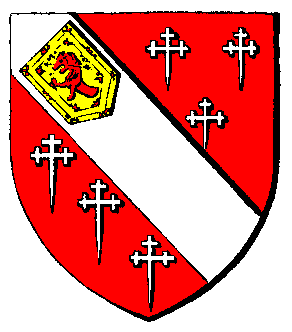
Gules, on the upper part of a bend between six crosses crosslet fitchy argent, an escutcheon or charged with a demi lion rampant, pierced through the mouth with an arrow, within a tressure flory counter flory gules--HOWARD, Baron Howard, Earl of Surrey.
Gules, on a bend between crosses botonny argent, a mullet in the point of the bend sable--Monsire de ORMESBY, Harl. MS. 6589.
 |
| Bend double downset? |
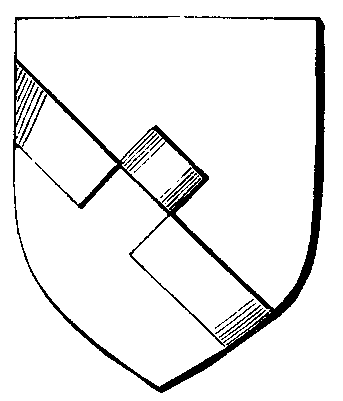
De argent a une bande daunce de vert a ij coties daunce de goules Sir Edmund de KENDALE--Roll, AD. 1308-14(Lansd. MS. 855).A bend may be composed of charges placed bendwise, e.g.
Azure, a bend double dancetty argent--LORKS.
Per bend fracted[in another MS. double dancetty] or and gules, two birds in bend sinister counterchanged--RAUFF.
Per bend sinister fracted[in another MS. double dancetty, and a third MS. rompu] argent and sable six martlets counterchanged--John ALLEYNE, Suffolk.
A bend of five lozenges combined or--Jon le MARESCAL, Harl. MS. 6137.In bend is a term used when bearings are placed bendwise.
 |
| BIZZET. |
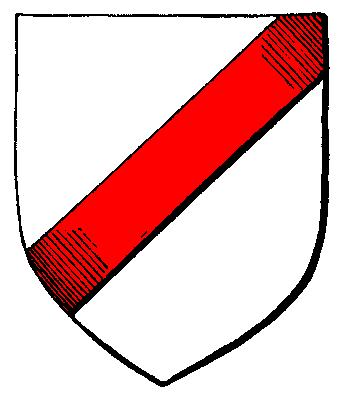
Argent, a bend sinister gules--BIZZET, Scotland.According to Nisbet, bends sinister were formerly much borne in Scotland, but have generally been changed to dexter bends of late, from a mistaken notion that they always betokened illegitimacy. It is the sinister baton(or diminutive bend couped), which alone conveys this disgrace, In Germany the bend is borne almost as frequently sinister as dexter.
Or, a bend sinister azure--TRYE[originally from France].
Argent, three bendlets engrailed sable; over all a scarpe gules--BLAGE, Kent.
 |
| BOTRINGHAM. |
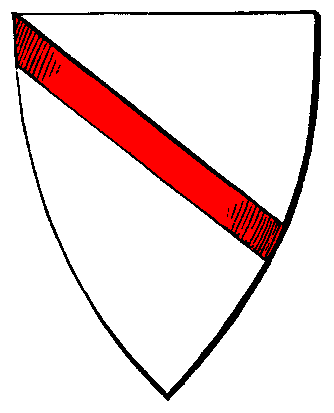
Argent, a bendlet gules--BOTRINGHAM, Another branch bears three bendlets.Bendlets are occasionally enhanced or placed in chief sinister. They are also subject to the same variations as the bend, both as to margin and as to charges.
Or, two bendlets azure--DOYLEY, Oxfordshire.
Argent, a bendlet gules; over all a cross or--GALLWAY, Ireland.
 |
| BYRON. |
Argent, three bendlets enhanced gules--BYRON, co. York.There are cases where the word 'baston' is used for 'bendlet,' e.g. in the arms of SEGRAVE. The glass existing in Dorchester Abbey Church, Oxon, exhibits the ancient drawing of the 'baston' of the roll, which may well be contemporary with the glass.
Argent, two bendlets, one enhanced, the other in base azure; over all a saltire gules--DORIEN.
Or, three bendlets enhanced gules--GRYLLS, Cornwall.
Gules, three bendlets enhanced or--GREILEY[or Gresley], Lord of Manchester. [Also City of MANCHESTER.]
Argent, three bendlets crenellé sable--H. DE COSTELLO, Bp. of Hereford, 1504.
Gules, on two bendlets or, six fleur-de-lis vert--DRAPER.
Sir Walter de FRENES, de goules a ij bendes endentes de or et de azure, le un en le autre--Roll, temp. EDW. II.
 |
| SEGRAVE. |
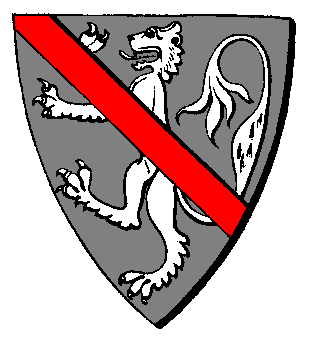
Sire Henri de SEGRAVE, de sable, a un lion rampand de argent[corone de or] e un baston de goules--Roll, temp. ED. II.Bendwise, or bendways: when the charge is placed lengthways in the middle of the shield, like a bend. Cf. barwise.
Argent, Robert de WELLE, d'argent ov deux bastons(=bendlets) de goules besante d'or. Roll, temp. HEN. III.
 |
| MONTFORT. |
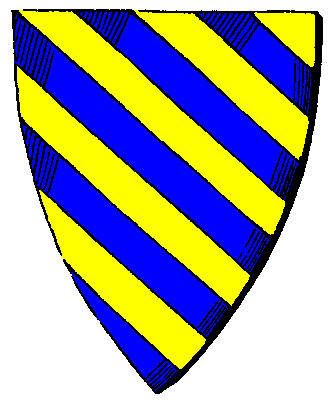
Monsire de MONTFORT port bende de X. peces d'or et d'azure--Roll, temp. ED. III.Bendy sinister(fr. barré), with the lines drawn from the left-hand upper or sinister corner of the shield, is rarely found.
Monsire de St.PHILIBERT port bende de VI. peces d'argent et d'asur--Roll, temp. EDW. III.
Bendy of six, champaine purple and argent--BOWBRIDGE.
Bendy wavy of six, argent and azure--PLATER, Suffolk.
Bendy sinister of eight, gules and argent--SCUBERSDORF, Bavaria.
Bendy sinister of ten, azure and or--Piers de MOUNTFORTH.
 |
| Paly bendy. |
 |
| Paly bendy sinister. |
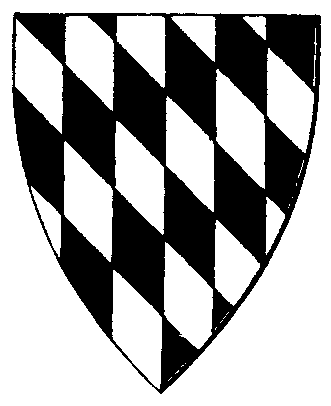
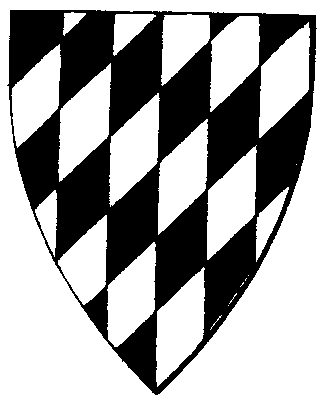
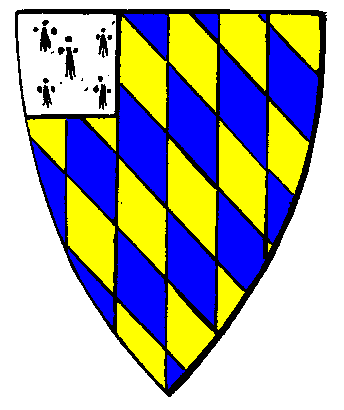
Bendy barry of eight, gules and or--HOLLAND.Bendy paly, or Paly bendy. According to the late Mr.Wyatt Papworth(from whose MS. note-book these illustrations are taken) Paly bendy is the better term, since, although it is not known to occur, the same might have to be drawn Paly bendy sinister.
Bendy barry argent and gules--CRISPIN, co. Lincoln.
 |
| BUCK. |
Bendy paly of eight? or and azure, a canton ermine--BUCK(Bart.), Linc.
Bendy paly or and azure--BUCK, Agecroft Hall, Manchester.
Bendy paly argent and gules--SYDENHAM.
Paly bendy gules and azure, martlets in orle or--HENDLEY.
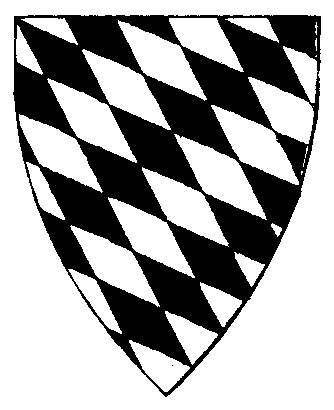 |
| Bendy lozengy. |
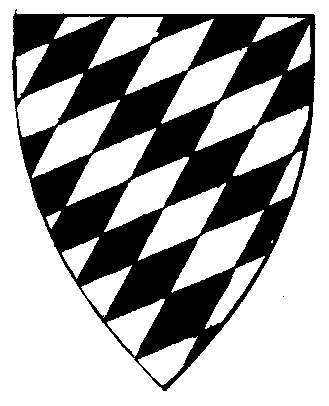 |
| Bendy lozengy sinister. |
Bendy lozengy or and gules--Isabel, daughter of Aylmer, Earl of ANGOULEME, and wife of King John.
Bendy lozengy, argent and sable--CROFTS, co. Lancaster.
Bendy lozengy(? paly) of eight, or and azure--BUCK, co. Lincoln.
Bendy lozengy barry, sable and or--IPRE.
Bendy lozengy barry or and sable--CANCELLOR.
Bendy lozengy(? paly), argent and azure--BAVARIA[Sandford's Genealogical History].
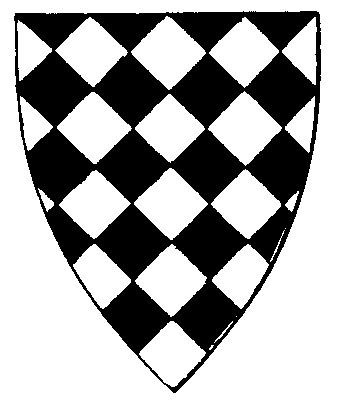 |
| Bendy dexter and sinister. |
 |
| Pily bendy. |
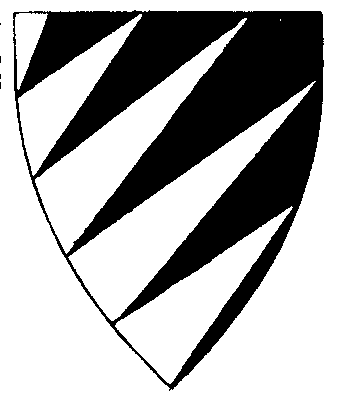 |
| Pily bendy sinister. |
Or, a betony proper--BETTY.
Azure, on a fesse between three lozenges or, a bethune leaf slipped vert--BETHUNE, Nethertarvit.
 |
| BEVERLY. |
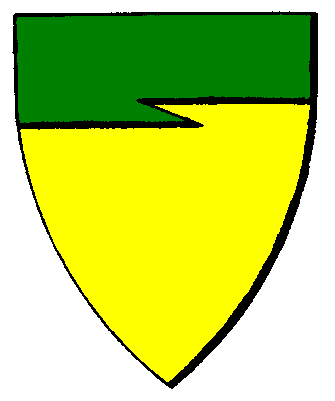
Or, a chief bevily vert--BEVERLY.
Gules, a bend bevilled or--BOVILE.
Per pale beviled azure and or--ALTHAM.
 |
| DYNGHAM. |
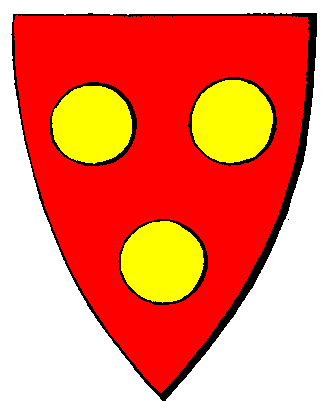
Gules, three bezants--DYNGHAM.
Monsire de WORSELEY port[d'argent, une bend entre vi merletts gules] a trois besands en la bend--Roll, temp. ED. III.
 |
| RICHARD, KING OF THE ROMANS. |
Le Conte de CORNEWAIL argent, ung Lion de goulz coronne or, ung borde de sable besante d'or--Roll, temp. HEN. III. [i.e. Richard PLANTAGENET, king of the Romans, and earl of CORNWALL, son of King John].Bible. See Book.
Monsire Alen de ZOUCH port gules besante--Roll, temp. ED. III.
Argent, a fret of six pieces bezanty--WYKE.
Azure, bezanty--BESLET, BYSSETT, BYSET, &c.
 |
| Bill-head. |
 |
| Wood-bill. |
Ermine, two wood-bills sable with long handles proper in saltire a chief azure ...... &c.--William BILL, D. D. ob. 1561.
Ermine, three bills sable--DENNYS, Devon.
Argent, three wood-bills in sable--GIBBES.
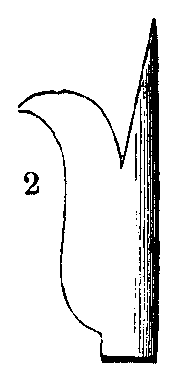
Sable, three bill-heads(like fig. 1) argent--LEVERSEGE.
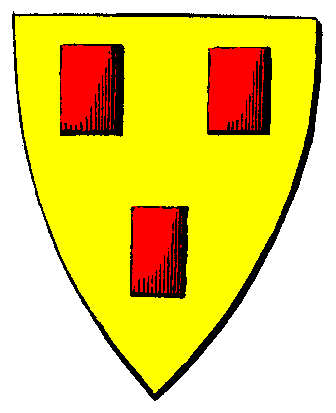 |
| MERLING. |
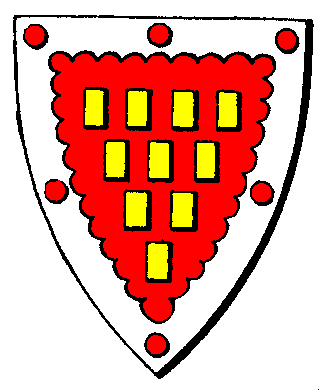 |
| SALTER. |
Or, three billets gules--MERLING.They are not always straight-sided, being sometimes raguled, and this possibly illustrates the original meaning, namely, that they were blocks of wood cut with the bill, or woodman's axe. An example of a carved stone billet also occurs.
Gules, ten billets, 4, 3, 2, and 1 or, within a bordure engrailed argent, charged with ten torteaux--SALTER.
Monsire Bartholomew GABRIEL, or, a vi billetts sable--Roll, temp. ED. III.
Argent, a billet, raguled and trunked sable, inflamed in three places proper--BILLETTES.
Argent, three stone billets carved gules--BILLERBERG.
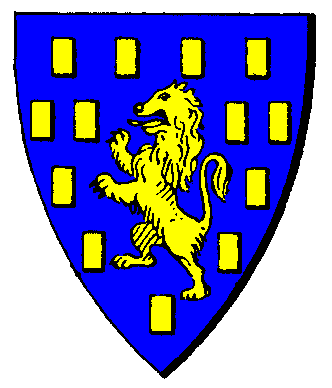 |
| Earl of ROCHFORD. |
Azure, semé of billets, and a lion rampant or--Earl of ROCHFORD. [These are the NASSAU arms.]Billetty counter billetty is a mode of blazoning barry and paly, when the divisions of the former are as wide again as those of the latter, so as to be distinguished from chequy.
Mahewe de LOVAYNE, goules billete d'or, une fece d'argent--Roll, temp. HEN. III.
Geffrey GACELYN, d'or billety de sable, ung label de goules--Ibid.
William de ST.OMER D'azure, billety d'or a ung face d'or--Ibid.
Billetty counter billetty gules and argent--BILLINGER.Biparted. See Cross, §8.
Gules .... &c., a chief embattled argent, with three nine-leaved birch branches vert--BYRCH, Essex.Birdbolt. See Arrow.
Sable, a fesse between three birch-leaves argent--BURCHE, Devon.
Or, three birch-twigs sable--BIRCHES.
Gules, a bird standing upon an apple or--CONHAM, Wilts.According to heralds, birds, unless the contrary is specified, are to be emblazoned with their wings close, as it is termed, except in the case of the eagle, when it would be drawn with wings displayed. But there is much variety of terminology applied to the mode of representing birds, and, according to theoretical heraldry, by a combination of the following terms the variety may be increased almost ad infinitum. For instance, a bird might be represented as: 1. Close; and beneath this the following varieties,--cl. embowed, cl. preying, cl. in full aspect, cl. aspectant, or at gaze, cl. in trian aspect, and cl. in trian aspect at gaze, 2. Displayed; under this, displ. erect, displ. inverted, displ. with double head, displ. without wings, displ. in majesty, displ. surgeant. 3. Expansed; and under this exp. elevated, exp. sepurture, exp. disclosed. Examples of one or two of the above will be found under Eagle, Falcon, &c., but practically the terms more frequently met with are less technical; e.g. a bird is regardant, or recursant, perched, standing, sitting, feeding, pecking, preying or trussing, pruning its wings, rising, volant, singing, croaking(of ravens), and pendent when dead and hanging. Again, a bird may be membered, collared, armed, crested, beaked, legged, jelloped, and combed(of cocks) of a different tincture; birds may also be jessed, hooded, and belled(of falcons), and vulned, or in piety(of pelicans). References are also frequently made to the wings, head, &c., which still further add to the variety of description.
Gules, a bird on a rock proper--ROCK.
Azure, a bishop[some say S.Michael] mitred and vested standing in the porch of a church, the dexter hand elevated praying over a cauldron on a fire, and containing three children all proper; in his sinister hand a crozier or--See of ABERDEEN.Bisse, (fr., Ital., biscia): a kind of snake. See Serpent.
 |
| Manage-bit. |
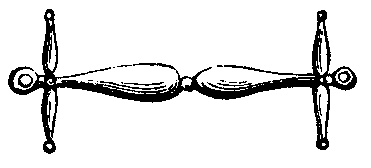 |
| Snaffle-bit. |
 |
| Boss. |
Azure, on a chevron argent, between three manage-bits or, as many bosses sable--Company of LORINERS. [Founded temp. HEN. VII., but incorporated 1712.]Snaffle-bit. This appears to be distinguished from the manage-bit, and is thus represented.
Sable, three snaffle-bits or--MILNER, Pudsey, Yorksh., [also of London, 1633-4].Boss of a bit: this is another charge in the same arms of the Company of BIT-MAKERS, as will be seen above, and it is represented as shewn in the margin.
Azure, three blackbirds proper[and in other arms of same family with a chief dancetty sable]--MELLOR, co. Derby.Bladed, (fr. tigé): an expression used when the blade or sprout of any grain is of a different tincture.
Argent, a blackbird singing perched upon a vine vert, thereon a bat or--RONAYNE, co. Waterford.
Vert, a cross raguly humetty or, on a chief of the last three blackbirds proper--BECK, Surrey: granted 1864.
Argent, on a chevron azure between three blackbirds proper, a crescent enclosed by two cinquefoils or--SLEIGH, Scotland.
Azure, semé of trefoils argent, a lion rampant of the last--HOLLAND.
 |
| NEVILL. |
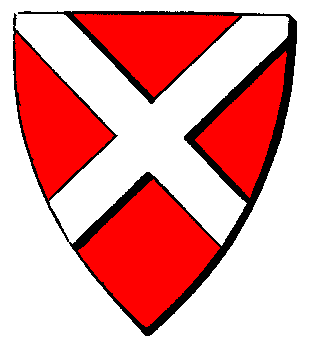
Gules, a saltire argent--NEVILL, Earl of Warwick.3. The CHARGES, if any there be, between which the ordinary is placed, are next to be mentioned, as,
Azure, a chevron or--D'AUBERNOUN, Surrey.
Argent, a bend engrailed sable--RADCLIFFE, Sussex.
Per saltire argent and azure, a saltire gules--GAGE, Hengrave, Suffolk.
Gules, a chevron between three mullets of six points, pierced, or--DANVERS, Northamp.
Or, a fesse between three lions rampant gules--BANNERTON, Salop.
 |
| WAKE. |
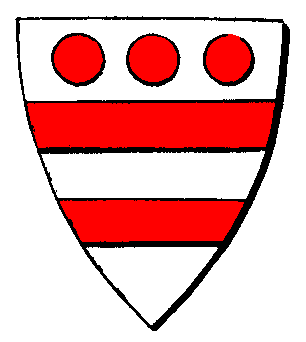
Argent, two bars gules, in chief three torteaux--WAKE, Linc.If there be no ordinary, the principal charge, or the charge or charges which cover the fesse-point, or are in the midst of the field, should first be named, and any charge whose position is not specially mentioned, or at least implied to be otherwise, is understood to be in the middle of the shield.
Gules, three hands holding respectively a crown a key and a purse or--Arms ascribed to NIGELLUS, Bp. of Ely, 1133-69.
 |
| WILLIAMS OF THAME. |
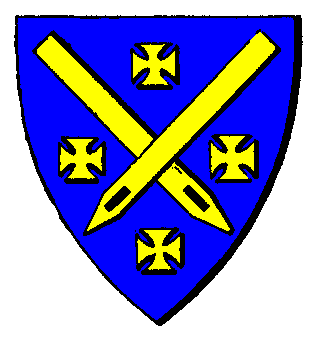
Azure, two organ-pipes between four crosses patée or--Lord WILLIAMS of Thame.If there be no charges of the kinds already mentioned, whatever charges there may be must be named after the field, notice being taken of their position with regard to one another, as.
Sable, a lion passant guardant or, between three esquire's helmets argent--COMPTON, Northamp.
Azure, two trumpets pileways between eight crossed crosslets 3, 3, 2, or--TRUMPINGTON.
Sable, three ducal coronets in pale or--The see of BRISTOL.When three charges are borne two and one it is superfluous to say so, as they are always to be drawn in that position if no other be mentioned. Example:--
Azure, ten estoils, four three, two, one, or--ALSTON, Beds.
Sable, fifteen bezants, five, four, three, two, and one--County of CORNWALL.
Or, three torteaux--COURTENAY.Consequently the arms of England, when the three lions are one beneath the other, are not rightly blazoned, unless they are said to be in pale.
Argent, on a fesse sable, between three hawks rising proper, a leopard's face between two mullets or--STONEHOUSE, Radley, Berks.5. The BORDURE and the charges thereon are next to be mentioned.
 |
| Cardinal WOLSEY. |
Sable, on a cross engrailed argent, a lion passant gules, between four leopard's faces azure; on a chief or, a rose of the third, seeded of the fifth, barbed vert, between two Cornish choughs proper--The arms of Cardinal WOLSEY, now borne by CHRIST CHURCH, Oxford.It often happens that one ordinary or charge is superimposed over some other or others, and this, if so, should be named last, and expressed by the term over all.
Sable, on a chevron or, between three estoiles of the second(or last), as many crosses pattée fitchée gules--Archbishop LAUD.While conciseness in blazoning is sought after, it should never be forgotten that the best blazon is that which is the most perspicuous. Tautology and diffuseness in describing a coat of arms are undoubtedly faults, but ambiguity is a much greater one. In the choice of technical terms, English ones are in general to be preferred to French, and those whose signification is undisputed to those which have different meanings.
 |
| Blue-bottle. |
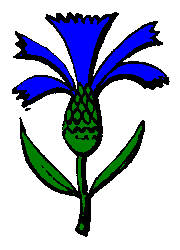
Argent, a chevron gules, between three blue-bottles slipped and leaved proper--BOTHELL.In one coat of arms(Harl. MS. 2151, fol. 110) heydoddes are named. As they appear to be a kind of flower, and are blazoned azure, possibly blue-bottles are meant.
Argent, a chevron between three blue-bottles azure couped vert--CHORLEY.
Argent, a chevron gules between three heydoddes azure slipped vert--DODD.Boar: this word implies the wild-boar, and occurs perhaps more frequently in Scottish than in English coats of arms. It was called with the old heralds sanglier. A young wild-boar is termed a Grice, and is borne by families of that name. The term Marcassin is also used for a young wild-boar, and this should be represented with tail hanging down, instead of twisted. The term Hog and Porc are also employed.
 |
| CRADOCK. |
 |
| COCHRANE. |
Argent, a boar passant gules armed or--TREWARTHEN.Boars are sometimes found as supporters, e.g. as dexter supporter in the arms of Garden CAMPBELL, Perth, and in one MS. they are seen as supporters to the royal arms of Richard III. This same king had, when Duke of Gloucester, adopted the boar as his badge, and it is supposed from this that he called one of his heralds Blanch Senglier. The wild-boar is also occasionally used as a crest, as well as the Boar's head.
Vert, a boar or--BOAR.
Argent, on a bend sable three grices passant of the first--GRICE.
Argent, on a mount vert a boar passant sable crined or--KELLET, co. Cork.
Argent, a fesse between two boars passant sable tusked, cleyed, and membered or; on the fesse a rose between two eagles displayed of the fourth--BUSHE, Bp. of Bristol, 1542-54.
Argent, a boar passant sable enraged and unguled gules--PERROT.
Or, a hog lying fesswise, a raven feeding on his back sable--DANSKINE, Scotland.
Argent, a chevron between three porcs sable--SWYNETHWAYTE.
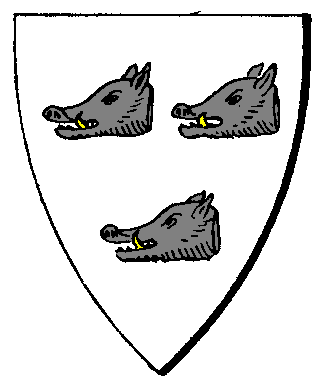
Argent, three boar's heads couped sable armed or--CRADOCK.
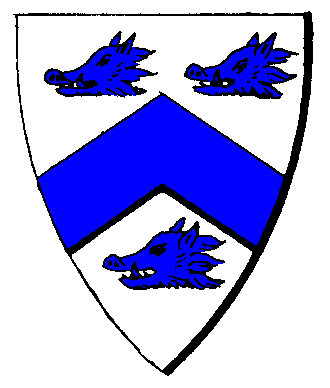
Argent, a chevron between three boar's heads erased azure--COCHRANE.
Argent, a chevron between three boars sable--BERHAM, also SWYNEY.
Adam de SWYNEBOURNE, de goules a trois testes de senglier argent--Roll, temp. HEN. III.
Sire Johan de SWYNEFORD d'argent a iij testes de cenglers de goulys--Roll, temp. ED. II.
Sire Johan de WYNSINGTONE, de sable iij testes de senglier de argent--Roll, temp. EDW. II.
Sable, in base on open boat with oars in a sea proper, on a chief argent three crescents vert--MACNAB.Bodkin, See Needle.
Barry, wavy of six argent and azure, on the middle bar a boat or; on a chief of the second two oars in saltire of the third between two cushions of the first tasselled or--Company of WATERMEN[Inc. 1556].
Or, a lighter-boat in fesse gules, [in one blazoning, a lighter vessel without masts]--DE WOLFO, Swevland. Azure, three barks or--AYER.
Argent, a boar .... a skiff with oars sable between the two in base--O'MALLEY, co. Mayo.
Gules, a raft or float removed or--BRETVILL.
Per pale gules and or, two boar-oars in saltire azure--TORRANCE.
 |
| NEWTON. |
 |
| BOLTER. |
Sable, two shin-bones in saltire, proper, the sinister surmounted by the dexter--NEWTON.So far as has been observed in all cases the bones are intended for human bones.
[Another branch of the family appears to bear the sinister uppermost.]
Sable, a shin-bone in pale, proper, surmounted of another in fesse--BAYNES, Cumb. [The family seem to have borne originally a saltire.]
Sable, two shank-bones in cross, that in pale surmounting the one in fesse argent--BAINES, York.
Or three broken shank-bones fesswise in pale gules--DE COSTA.
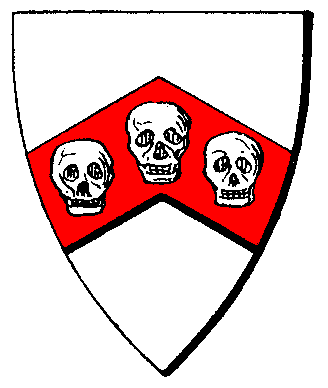
Argent, on a chevron gules, three human skulls of the first--BOLTER.In Achievements a skull is sometimes placed over the shield instead of the crest, to signify that the deceased is the last of his line.
Sable, a chevron between three human skulls argent--BOULTER.
Paly of six, or and gules, a jaw-bone in pale azure--DAMBOYS.
 |
| Electoral Bonnet. |
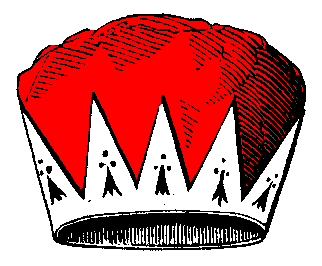
Argent, a fesse between three bonnets azure, impaled with or a chevron gules between three woolpacks proper--Company of BONNETMAKERS, Edinburgh.The velvet cap of crimson, within a coronet, q.v., is also called a bonnet.
 |
| OXFORD UNIVERSITY. |
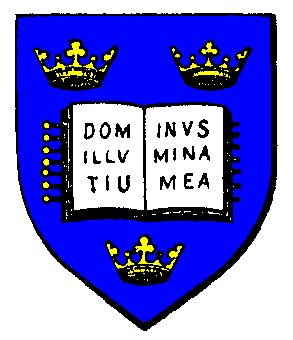
Azure, on an open book proper, having on the dexter side seven seals or[Rev. V. 1], between three ducal coronets of the last the words DOMINVS ILLVMINATIO MEA. (PS. xxvii. 1.)--UNIVERSITY OF OXFORD.Amongst Books the Bible is the one most frequently mentioned by name.
[Previous to King James' reign SAPIENTIA ET FELICITATE occur(e.g. in glass in Bodleian Library, and in a typographical device, 1585). Still earlier, in a typographical device, the motto on the books runs VERITAS LIBERABIT BONITAS REGNABIT.]
Argent, three books closed gules, leaved, clasped, and garnished or--PAYNTER, Norfolk.
Gules, a clasped book upon between three buck's heads erased or--Seal of John BUCKNER[Bp. of Chichester, 1798-1824].
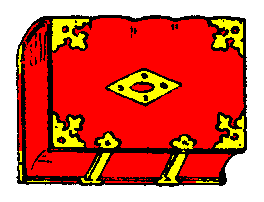 |
| Bible, STATIONERS' COMPANY. |
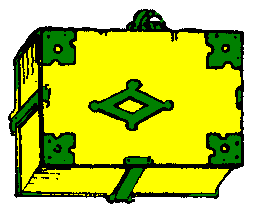
Vert, in chief, the holy Bible expanded proper, in base a sand-glass running argent--JOASS, Scotland.The Music, or Song-book, borne by the parish clerks of London, is of oblong form, and similar to that in the margin. Musical lines also occur, consisting of five parallel lines of music extending across the shield horizontally.
Argent, on a fesse gules, three Bibles of the second garnished or, a falcon volant between two suns of the last--SLAMBERG.
Argent, an eagle displayed double-headed sable, armed gules, on a chief azure a book of the Holy Scriptures, open proper, stringed or--W. MORGAN, Bp. of Llandaff, 1549.
Azure, on a chevron or between three Bibles fessewise, clasp downwards gules, garnished and leaved of the second, an eagle rising proper enclosed by two red roses seeded or barbed vert; from the chief a demi-circle of glory edged with clouds proper, therein a dove displayed and nimbed argent--Company of STATIONERS, London[Incorporated 1556].
Argent, a chevron azure between three pheons gules; on a chief of the second an open Holy Bible proper edged and sealed or, inscribed, Proverbs, cap. xxii. ver. 6, enclosed by two crosses flory of the last--JOHNSON.
 |
| Song-book, PARISH CLERKS. |
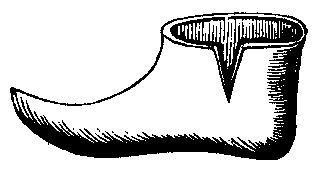
Azure, a fleur-de-lis or; on a chief gules a leopard's head between two song-books(shut) of the second, stringed vert--Company of PARISH CLERKS, [Inc. 1233, arms granted 1582.]Boot: the boot is referred to under different designations, e.g. the Irish brogue, the Dutch boot, Antique boot, &c.: with these should be named the shoe.
Azure, on a fesse argent 5 musical lines sable charged with a rose gules, and two escallops of the third in chief .... &c.--TETLOW, Lancaster. [Arms granted, 1760.]
Argent, two bars wavy azure, on a chief of the second an open music-book or between two swords in saltire of the first hilted and pommelled of the third--THE ACADEMY OF THE MUSES, London.
Books also occur in the arms of Dean and Chapter of RAPHOE.--College of S.Mary at Manchester in LANCASTER.--Company of SCRIVENERS, London; and in those of the families of CONROY, co. Montgomery.--JOASS, Scotland.--GRANT.--SMITH, Edinburgh.--EVANTS, Norwich.--B. PORTEOUS, Bp. of Chester, 1777.--FARDELL, co. Lincoln, and many others.
 |
| Irish brogue. |
Argent, a boot sable, top turned down or, soled gules--BOOT.
Or, three boots sable--HUSSEY.
Argent, three antique boots sable, spurs or--MANN.
Argent, two Dutch boots, the soles erect, embowed at the knee and endorsed sable, issuant out of a pile in base vert, spurred or--BOOTE.
Argent, a shoe proper, on a canton per chevron gules and ermine, three covered cups or, two and one--O'HAGAN.
Argent, three men's boots sable--COKER, co. Dorset.
Gules, a chevron between three brogues or--ARTHURE, Ireland.
 |
| HUNDESCOTE. |
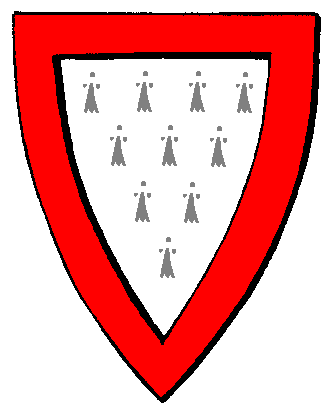
Ermine, a bordure gules--HUNDESCOTE.The bordure is placed over all ordinaries, except the chief, the quarter, and the canton, which invariably surmount it, with perhaps some few exceptions, which are in such cases to be specially described.
Or, a bordure vair--GWINE, or GYNES.
Ermine, a bordure compony or and sable--RENDELL, Harl. MS., 1441.
Azure, a chief paly of six gules and or within a bordure engrailed sable--KEITH, Scotland.
Quarterly gules and or a bordure counterchanged; over all a chevron vair--FENWYKE.
 |
| STAFFORD. |
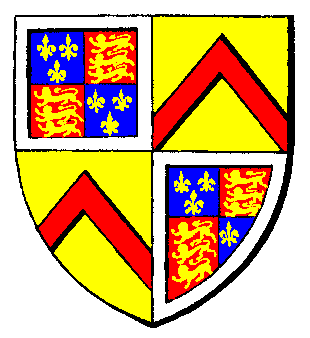
Quarterly, first and fourth France and England quartered within a bordure argent; second and third or, a chevron gules--STAFFORD, Duke of Buckingham.When a bordure is bezanté, billetté, or the like, the number of bezants or billets is generally eight, unless some other number is particularized. The arms of Richard, King of the Romans, are represented sometimes with eight, sometimes with more, bezants, q.v.
 |
| HUGH DE VERE. |
Sire Hue de VEER quartile de or e de goules a un molet de argent od la bordure endente de sable--Roll, temp. ED. II.A bordure compony should consist of sixteen pieces. It was supposed to have been a mark of illegitimacy, in cases where a natural son has succeeded by bequest to the estates of his father.
John le FITZ GEFFREY, esquartele d'or et de goules, a la bordur de verree[i.e. vair]--Roll, HEN. III.
William de SAY, autiel[i.e. the same] sans le bordure--Ibid.
Gules, three garbs, within a bordure engrailed or, entoyré or pomeis--KEMP.Bordure enurney, charged with eight beasts, and so bordure of England is a gules, enurney of lions, i.e. charged with eight lions of England.
Or, a lion rampant azure armed and langued argent, within a bordure of the second entowry of mitres-gold--William of S.Mary-Church, Bp. of LONDON, 1199-1221.
Le Comte de RUGEMOND les armes de GARENE a un quarter de ermine, od la bordure de Engleterre--Roll, temp. ED. II.The Bordure of France is azure, charged with eight fleurs-de-lis or: and the Bordure of Scotland is the double tressure flory counter flory gules, or more probably, a bordure or, charged with such a tressure.
 |
| Bottle. |
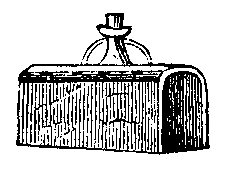
Argent, on a chevron between three leather-bottles sable, as many bugle-horns stringed of the first--Company of BOTTLE-MAKERS and HORNERS[Incorporated 1638].Bouclé, (fr.): buckled, i.e. having a buckle; e.g. of a collar.
 |
| BOWES. |
Ermine three long bows, in fesse gules--BOWES.Bowed. See Embowed.
Argent, a chevron between three stone-bows sable--HURLESTONE.
Azure, an antique bow in fesse and arrow in pale argent--MULLER.
Azure, a bowstring in fesse fretted with eight arrows interlaced in bend dexter and sinister, argent and feathered or--Town of SHEFFIELD.
Gules, two long bows bent and interlaced in saltire or stringed argent, between four bezants each charged with a fleur-de-lis azure--REBOW, Essex, 1685.
Sable, a hand-bow in bend between two pheons argent--CARWARDING, Hertford.
Sable, two string-bows endorsed in pale or, garnished gules, between two bundles of arrows in fesse, three in each, gold, barbed and headed argent, tied as the third--BENBOW, Scotland.
Argent, two bows one within the other in saltire gules, strung or--BOWMAN.
Ermine, a cross-bow bent in pale gules--ALBASTER, Stafford.
Ermine, a cross-bow bent point downwards, between three moorcocks sable--HIGHMORE, Cumberland, temp. HEN. IV.
Or, two bars gules, on a chief argent three open bowls of the second, the insides of the third--HALGHTON.Boy. See Child.
Azure, three standing-bowls argent, out of each a boar's head or--BOWLES, co. Lincoln.
Gules, on a bend sable, three wassail bowls or--CHRISTMAS, Kent.
 |
| FITZ-HUGH. |
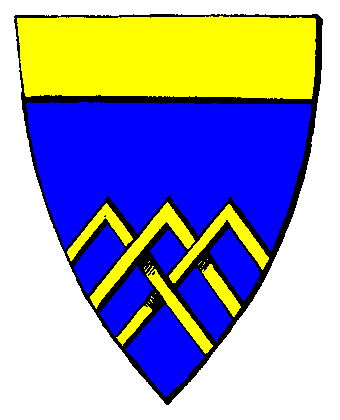
Azure, three chevronels braced(or interlaced) in the base of the escutcheon or, a chief of the last--Robert FITZ-HUGH, Bp. of London, 1431-36.Braced=Vambraced.
Sable, six annulets braced palewise in pairs argent two and one--ANDERTON, Lancaster.
Argent, three double brackets sable--BIDDLE.Bramble-wreath. See beneath Chaplet.
 |
| DE LA MARE. |
Azure, three breams bendwise, 2 and 1, or--DE LA MARE, Abbot of Peterborough.Breast-plate. See Cuirass.
Gules, three breams haurient argent--DE LA MARE, Fisherton, Wilts.
Vert, three sea-breams haurient or--DOXEY.
Azure, three breams or--BREAME, Essex.
Argent, a rose between three bricks sable--BRICKS.Brick-kiln: this occurs but in one coat of arms.
Argent, on a mount in base vert, a brick-kiln of four stories gules flamant and fumant on the second and top stories--BRICKILL.Bridle: this occurs but seldom by itself, though a horse with bridle, or bridled, is not unfrequent.
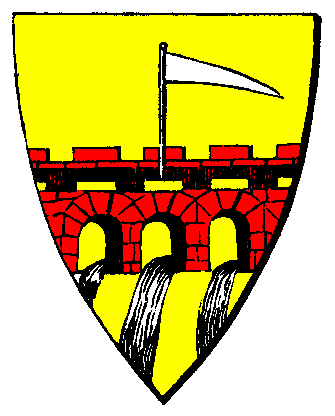
Argent, a bridle or--BRIDLED, Devon.Bridge, (fr. pont): when this charge occurs, the number of its arches, and all its other peculiarities, should be carefully noticed in the blazon. The charge occurs in the insignia of several towns, e.g. BIDEFORD, BRIDGWATER, GRAMPOUND, &c.
Argent, a horse's head gules bridled of the first--GRONO GOCH.
Argent, a horse's head erased sable bridled or--FLINN.
 |
| TROWBRIDGE. |
Gules, a bridge of one arch argent, masoned sable, with a stream transfluent proper--BRIDGE, Scotland.Brilliants. See Diamond.
Gules, three bridges of as many arches .. CRAIG, Ireland.
Azure, a bridge of two arches argent--POUNT.
Or, on a bridge of three arches gules, masoned sable, the streams transfluent proper, a fane argent--TROWBRIDGE, Wilts. [Another, the field argent, the flag or. Another, as above, a tower gules, thereon a fane argent.]
The figure is represented on an island, seated and holding in the right hand an olive-branch, in the left a spear erect, surmounted with the cap of liberty, her arm resting on a shield charged with the union cross, and near it several bales of goods lying on the ground; over all is the legend, 'TRADE AND PLANTATIONS.'Broaches. See 1. Embroiderers; 2. Winepress.
 |
| Planta-genista. |
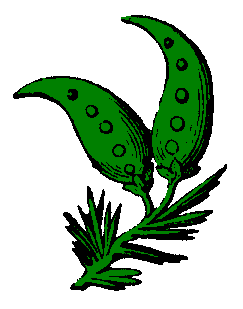
Azure, a hand erect between three broomslips proper--BROOME, Salop.Brown. See Colour.
Vert, semy of broomslips, and over all a lion rampant or--Sandde HARDE, Denbigh.
Argent, three broom-branches vert--BROME, Somerset.
 |
| Block-brush. |
 |
| Flat-brush. |
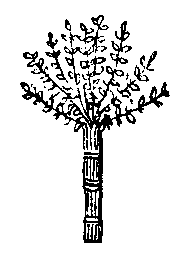
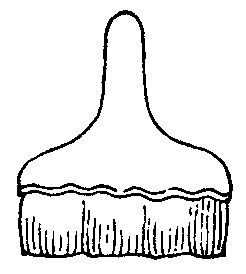
Argent, on a chevron azure three brushes of the first--PENWALLIS.Brusk. See Tenné.
Azure, two besoms in saltire or--BORSTON.
Argent, a chevron between three besoms gules--BROME.
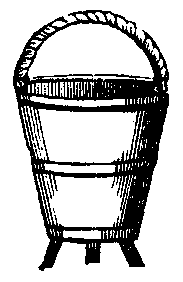 |
| Bucket. |
Argent, three well-buckets with feet sable, hoops and handles or--PEMBERTON, Yorkshire.
Argent, an annulet suspending two buckets saltire-wise sable between three fleurs-de-lys gules--BANNISTER.
Argent, a fess between three pails sable hooped and handled or--FITZ HOW.
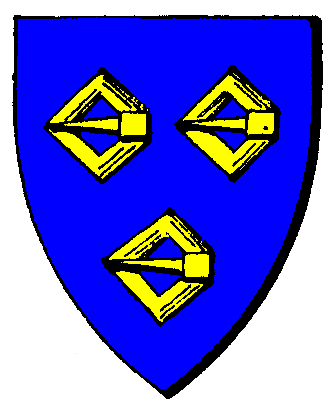 |
| ROSSELYN. |
Sire William ROSSELYN de azure iij fermaus de or--Roll, temp. ED. II.
Sire Peres ROSSELYN de goules a iij fermauls de argent--Ibid.
Sire Robert MALET de sable a un cheveron e iij fermals de argent--Ibid.
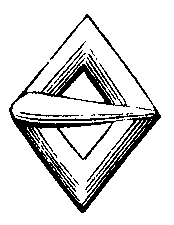 |
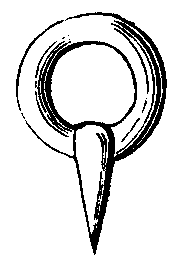
| Arming-buckle. |
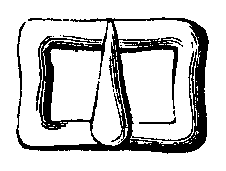 |
| Square buckle. |
 |
| Round buckle. |
 |
| Round buckle. |
 |
| With cross-bar. |
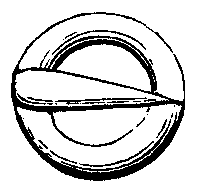
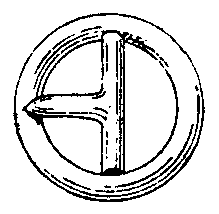
Azure, an arming-buckle argent, between three boar's heads or--FERGUSON, Kilkerran.We find besides, square buckles, circular buckles, and even oval buckles figured. In some examples the tongues are turned to the dexter, in others to the sinister; and to the variety of buckles may be added the gar buckle(possibly contraction for garter buckles), and the belt-buckle.
Argent, three lozenge-(or mascle-, or arming-)buckles gules--JERNINGHAM or JERNEGAN, Suff.
Argent, a fesse sable in the dexter chief a square buckle gules--GILBY.
Sable, three round buckles argent, tongues pendent--JODDREL, Cheshire.A strap or garter with a buckle may be termed buckled, and generally the buckle is of another tincture.
Azure, three gar-buckles argent(possibly garter-buckles)--STUKELEY.
Argent, a chevron between three circular buckles sable--TRECOTHIK.
Or, a lion rampant gules; over all on a bend wavy sable an oval buckle tongue upwards, between two mascles argent--SPENCE, Edinburgh.
Argent, three belt-buckles sable--SAPCOTT.
Argent, a fesse azure between three belt-buckles gules--BRADLEY.
Gules, three men's garters nowed and buckled argent--SYDEMERS.Buckler. See Shield.
 |
| VARNECK. |
 |
| DOWNES. |
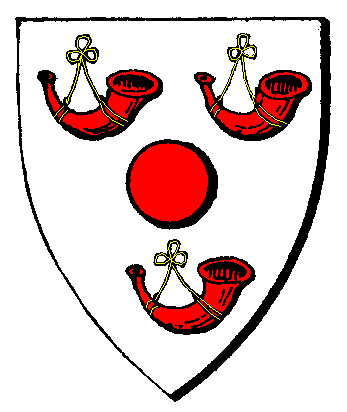
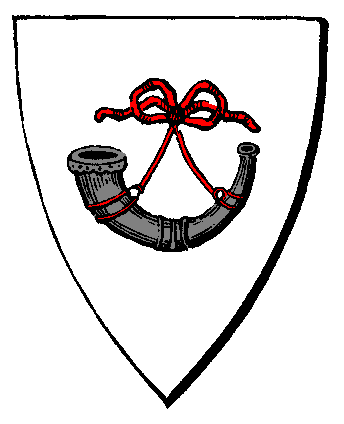
Argent, a torteau between three bugle-horns gules stringed or--VERNECK, Baron Huntingfield.
Argent, a bugle-horn sable, stringed gules--DOWNES.
Argent, a bugle-horn sable garnished gules, within the baldrick a mullet, in chief three holly-leaves proper--BURNET, Bp. of Salisbury, 1689.
Argent, an arrow or, feathered gules, between three bugle-horns stringed sable, and interlacing the flower one--HAULE, Devon.
Vert, three greyhounds courant argent, on a chief of the last as many bugle-horns sable, stringed gules--HUNTER.
 |
| Hunting-horn. |
Azure, a hare salient argent, round the neck a hunting-horn sable, stringed gules--KINEILAND, Scotland.The Cornet is named some works(but probably erroneously) as borne by HULME Abbey. See under crosier.
Gules, two huntsman's horns in saltire between four crosses crosslet or--NEVILL.
Sable, a crozier in pale or with two ribbons(or tassels) entwined about it argent, between four golden cornets(should be coronets)--Benedictine Abbey of HULME.Bulfinch. See Finch.
 |
| City of OXFORD. |
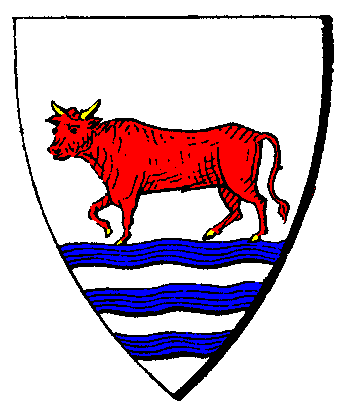
Bendy wavy argent and azure, an ox gules passing over a ford proper--City of OXFORD[according to some; according to others, Argent, an ox gules, armed and unguled or, passing a ford of water in base proper].
Ermine, a bull passant gules armed and unguled or--BEVILLE.
Argent, a chevron between three bulls passant sable--OXENDON.
Or, a bull passant sable collared and belled gold--HULL, Dorset(? temp. Hen. III.).
Argent, an ox passant gules, through reeds proper--RIDLEY.
Argent, a fess gules between three oxen sable--OXLEY, Yorkshire.
Ermine, a cow statant gules within a bordure sable, bezanty, a crescent for difference--CORVELL.
Argent, three cows passant sable, eyes gules, collared or--Benedictine Alien Priory at COWICK Devon.
Ermine, a calf passant gules--CAVELL, Cornwall.
Argent, a fess gules between three calves passant sable--CALVERLEY.
Argent, on a bend sable three calves passant or--VEAL.
Gules, a moile passant argent--MOILE, Cornwall.
 |
| TURNBULL. |
 |
| WALROND. |
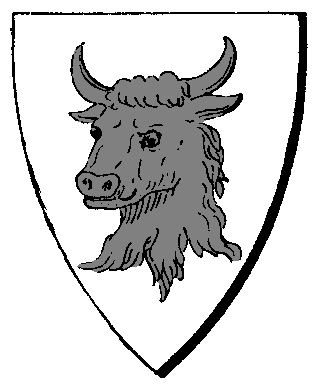
Argent, a bull's head erased sable--TURNBULL, Scotland.Bullet: the ogress or pellet.
Argent, a chevron gules between three bull's heads couped sable--BULLEINE[the same family as Anne BOLEYN, one of Henry the Eighth's Queens].
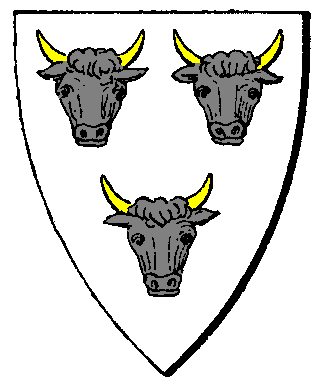
Argent, three bull's heads caboshed sable, armed or--WALROND.
Argent, three bull's heads erased sable, breathing fire proper--TRUMBULL, Berks.
Argent, three cow's heads erased sable--VACH or VEITCH.
A bull armed or is one of the supporters to the arms of DARCY, Westmeath.
Argent, a sea-bull's head couped sable--BULLOCK.
Argent, a bend gules between three bunten-birds proper--BUNTEN, Ardoch, Scotland.Bur leaf. See Dock.
Argent, three bunten birds azure; on a chief of the last of a sword fesswise as the first, hilt and pomel or--BUNTEN, Kilbride, Scotland.
Argent, a bend engrailed gules between three bunting-birds proper--BONTEINE, Mildovan.
Argent, a chevron sable between three bunten-birds proper--BUNTEN, Buntenhall, Scotland.
Quarterly or and gules three birds(probably buntings) counterchanged--BUNTING.
 |
| Burling-iron. |
Sable, a chevron between three burling-irons argent--BURLAND.Burre, (old fr.): cronel of a lance.
Gules, three burling-irons argent--BURLINGER.
Gules, from behind bushes vert, a stag courant argent, on a chief azure three castles of the field one and two--JAMES, Brecknock.Bust, (fr. buste). See Heads.
Gules, a flaming bush on the top of a mount proper, between three lions rampant argent, in the flanks two roses of the last--BRANDER, Elgin.
Gules, a burning bush proper between two roses argent in fesse, in chief two lions rampant, and a third in base of the last--BRANDER, Surrey.
Argent, a fesse between three bustards, gules--BUSTARD.Butt-fish. See Turbot.
Azure, three bustards, rising argent--NEVILL.
Or, a chevron sable between three bustards vert--LANDON.
Argent, a chevron between three bustards gules--KITCHING, Hereford.
Argent, a cross engrailed azure, between four bustards respecting each other sable--SMALRIDGE, Bp. of Bristol, 1714-19.
 |
| Butterfly. |
 |
| Harvest-fly. |
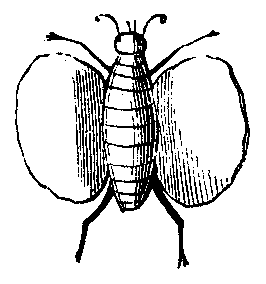
Argent, two bars between three butterflies volant sable--FLEMINGS.Buttrices: an old name for the knives used for paring horses' hoofs. They seem to be used solely for the punning on the name, but sometimes blazoned as Farriers' Implements.
Gules, a griffin passant, wings elevated argent; on a canton indented or, a butterfly volant azure--BUTTERFIELD, Surrey.
Argent, on a bend azure, three butterflies or--BUTTERWIKE.
Argent, on a bend sable, three butterflies of the first--BOTERFORD, Devon.
Azure, a harvest-fly volant argent--BUTTERFLY.
Sable, a harvest-fly, volant en arriere--BOLOUR or BOLOWRE.
Argent, three buttrices in fesse sable--BUTTRISS.
Azure, three buttrices, handles erect in fesse argent--BUTTRISCH.